Garage door blog · Tuscaloosa, AL
Insulated garage doors and Tuscaloosa summer heat
Is your garage an oven by mid-afternoon from June through September? An insulated door can take real heat out of an attached garage. Here is what the different cores do, what the R-value on the label actually measures, and when a cheaper fix gets you most of the way.
- Answered 24/7
- Tuscaloosa and West Alabama
- Seals matter as much as foam
By Lloyd Yeager, Garage Door Blog EditorUpdated October 2026
In Tuscaloosa, where about 71 days a year reach 90F or more, an insulated garage door is worth it if the garage is attached, used as a workspace or holds a fridge or freezer. Polyurethane cores insulate better per inch than polystyrene. Pair any insulated door with good weather seals, or heat comes in around the edges.
How hot does a Tuscaloosa garage really get?
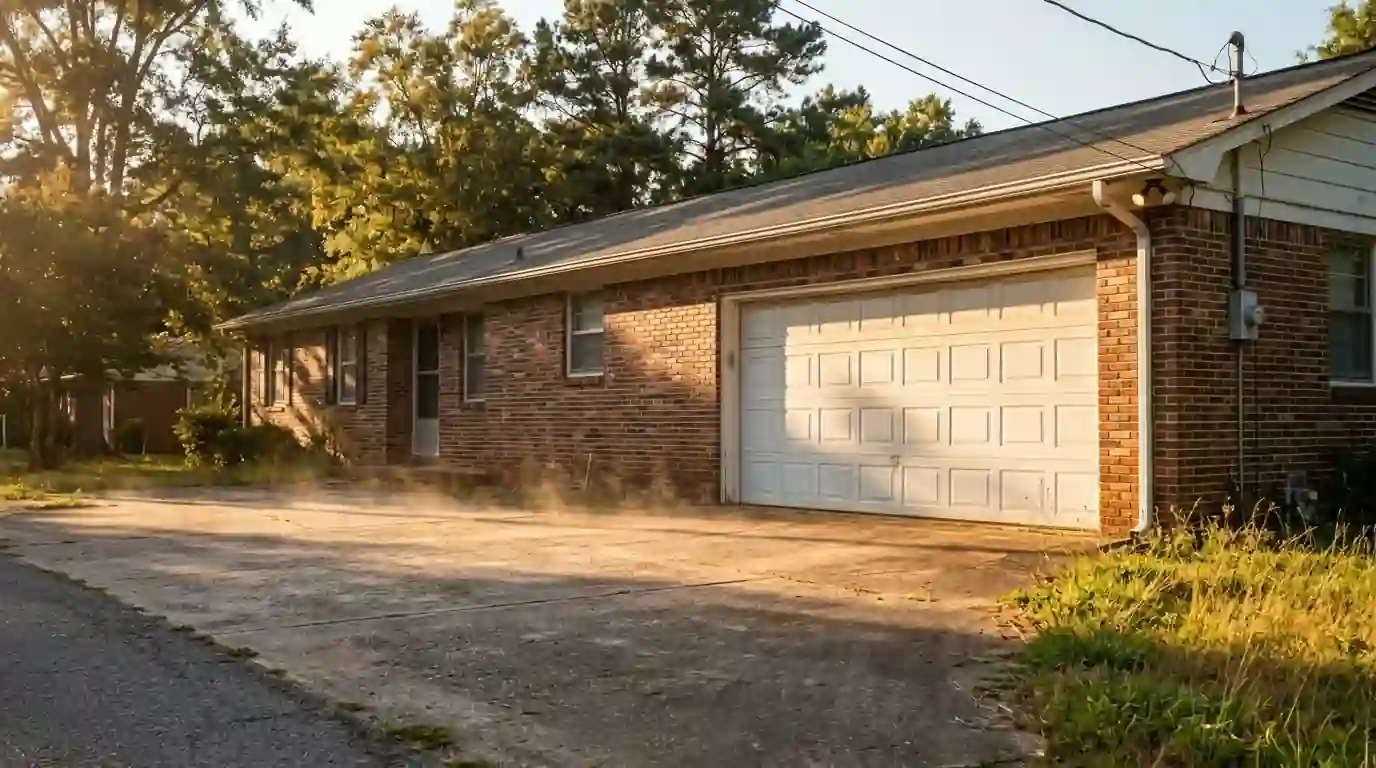
Hot. Tuscaloosa's July and August mean daily highs are 91.6F and 91.2F, and the city sees about 71 to 72 days a year at 90F or above, according to 1991 to 2020 normals published on Wikipedia's climate data. A garage door is often the largest single surface on the front of the house, and a thin steel skin facing west or south absorbs that sun all afternoon and passes it straight inside.
The humidity adds to it. WeatherSpark puts the muggy season at roughly May 25 to September 22, with July averaging 17.3 muggy days. Hot, damp air trapped in a closed garage makes it miserable to work in, and that air finds its way into the house through the connecting door.
Who gets the most out of an insulated door?
Not every garage needs one. A detached garage used only for parking gains little, since nobody is in it long and no heat reaches the house. The case gets much stronger when:
- The garage is attached and shares a wall, or a bedroom sits above it.
- You use the space as a workshop, gym, laundry or play area.
- A fridge or freezer lives there, working harder through every 90-degree afternoon.
- The door faces west or south and takes direct afternoon sun.
- You want a quieter door. A foam core deadens the rattle of a single steel skin.
Insulated doors are also stiffer. The foam fused between two steel skins resists dents from balls and bikes better than a single-layer door, which counts for something on a busy driveway.
Thinking about an insulated door for an attached garage? Call and we will talk through core types and sizes.
Call (205) 679-9076Polystyrene or polyurethane: what is the difference?
Insulated garage doors use one of two foam types, and they behave differently.
| Polystyrene | Polyurethane | |
|---|---|---|
| How it goes in | Rigid foam boards cut and fitted into each section | Liquid foam injected between the skins, where it expands and sticks to both |
| Insulation per inch | Lower | Higher |
| Stiffness | Adds some rigidity | Fuses to both skins, so the section is noticeably stiffer |
| Cost | Lower | Higher |
For an attached garage in this climate, a polyurethane door is usually the better long-term buy. For a garage that only needs to take the edge off, a polystyrene door is a reasonable middle ground. Clopay, Amarr and Wayne Dalton all build both types, and our doors with an R-value page covers the styles we install.
What does the R-value on a garage door actually mean?
R-value measures how well a material resists heat flow. Higher is better. The catch with garage doors is how the number is calculated. Many manufacturers quote the R-value of the foam core in the middle of a section. The installed door also has joints between sections, steel edges, end stiles, window inserts and gaps at the sides and bottom, and every one of those lets heat through.
So treat a door's R-value as a way to compare doors from the same maker, not as a promise of how cool the garage will be. Two doors with the same printed number can perform very differently if one has thermal breaks between the skins and tight section joints and the other does not. Ask how the figure was measured, and look at the joint design as well as the foam.
Also remember the walls and ceiling. If the garage has no wall or attic insulation, even an excellent door can only do part of the job.
Construction matters as much as the core. A three-layer door, with steel on both faces and foam between, is the type that lives up to its R-value. A two-layer door has one steel skin with foam or backing on the inside face, so it insulates less and the foam is exposed to bumps. Most raised-panel steel doors are sold in both builds, so ask which one a quote describes.
Why do weather seals matter as much as the foam?
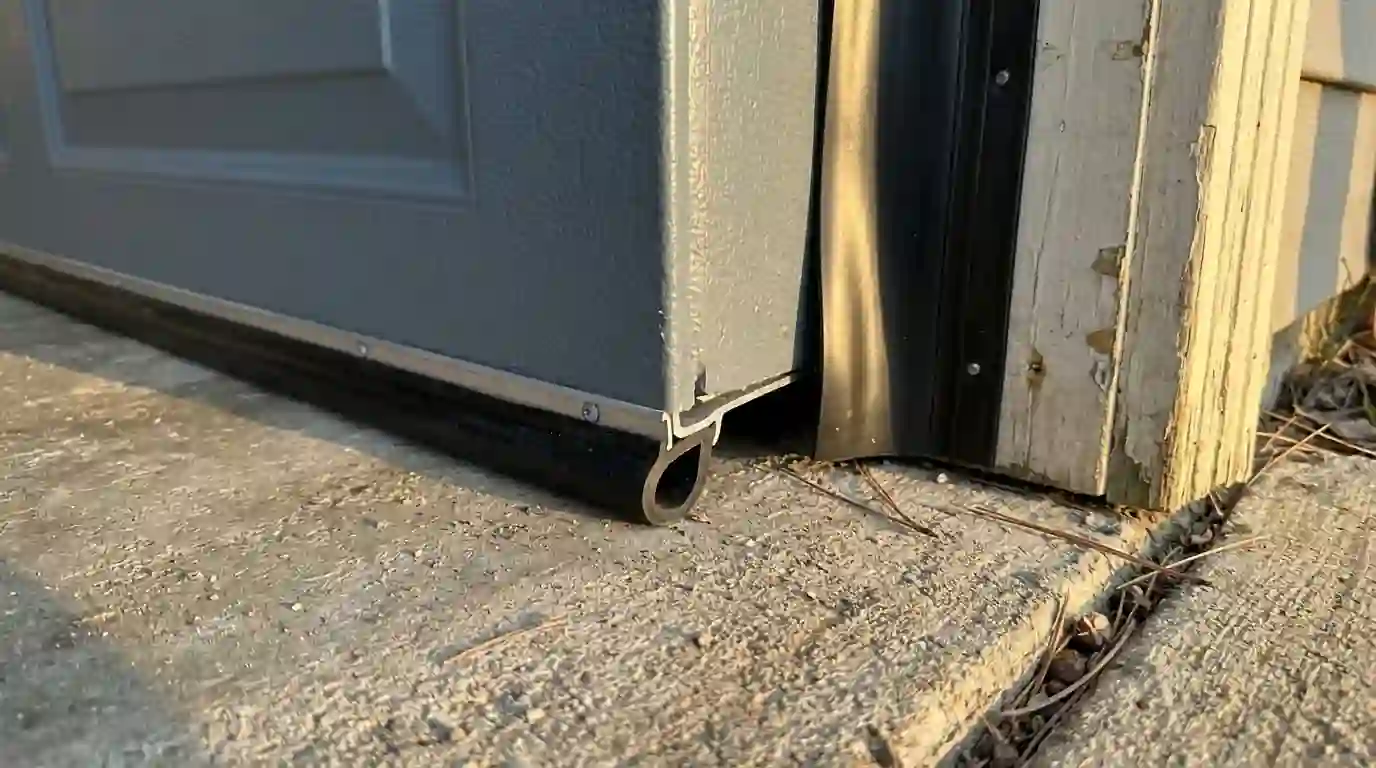
Air leaks carry more heat than you might think. A worn bottom seal, a gap along the side stops or a missing top seal lets hot, humid air pour in no matter what the door is made of. Press a hand along the edges of a closed door on a hot afternoon and you will feel the drafts.
Replacing tired seals is often the cheapest single improvement. HomeAdvisor puts complete garage door weatherstripping replacement at $200 to $600, and Fixr's range for adding or replacing weatherstripping on an existing door is $100 to $200. On an otherwise good door, that alone can make a noticeable difference. Our bottom seal replacement page explains the bottom, side and top seals and how each one fits.
Humid summers are hard on seals. Rubber and vinyl that bake in the sun dry out, crack and flatten, and a seal that has stopped flexing no longer meets an uneven slab. If your bottom seal is stiff, split or leaves daylight at one corner, it is due. Seals also keep out rain, leaves and the small pests that follow them.
Can you insulate the door you already have?
Yes, with a retrofit kit. These are foam panels or reflective batts that press or glue into the back of each section. HomeGuide prices DIY insulation kits at $50 to $200. They work best on flat or shallow raised-panel steel doors and they will take the edge off the heat.
There are tradeoffs. A kit adds weight, and a door that gets heavier needs its springs checked and possibly resized, or the opener will strain and the door will not balance. Kits also leave the steel skin exposed on the inside, so they do not add stiffness the way a factory-injected core does. Check the spring balance after installing one: disconnect the opener with the door closed, lift it halfway by hand and let go. If it drifts down, the springs need attention.
What does an insulated garage door cost?
Published installed ranges give you a starting point:
| Option | Published range | Source |
|---|---|---|
| Insulated door, professionally installed | $1,100 to $4,200 | Angi |
| One-car insulated door, installed | $750 to $1,900 | HomeGuide |
| Insulation kit for an existing door | $50 to $200 | HomeGuide |
| Complete weatherstripping replacement | $200 to $600 | HomeAdvisor |
HomeGuide puts a two-car insulated door at $1,500 to $3,700 or more. Size, core type, window inserts and the style of the panels drive the spread. If your current door also has rust, dents or a history of repairs, our guide on repairing or replacing helps weigh the whole picture, and the whole-door replacement page shows how a new door goes in.
Common questions
More questions on this
It can help when the garage is attached or a freezer runs there, but the effect depends on wall and ceiling insulation and seals. Nobody can promise a specific saving.
For an attached garage in a hot climate, usually yes. It insulates better per inch and fuses to both skins, making a stiffer, quieter section.
Yes. They weigh more than single-layer doors, so springs are sized to the new weight. The same applies when a kit is added to an existing door.
Generally, yes. Dark colors absorb more sunlight, so a dark door facing afternoon sun heats up more. Insulation slows how much of that heat reaches the garage.
Kits are made for flat or raised-panel steel doors. Wood and glass doors are better handled by choosing an insulated model or insulated glass when replacing.
Keep reading
Related articles and services
Repair or Replace Your Garage Door? How to Decide
Six signs that tip the decision, with sourced costs for both paths.
Read itWhat Garage Door Repairs Cost in Tuscaloosa, AL
Published ranges for repairs, panels and full door replacement.
Read itGarage Door Will Not Close? Check These Five Things
What to check when a seal or setting stops the door from closing.
Read it