Commercial Doors · Tuscaloosa, AL
Dock leveler and dock seal repair for Tuscaloosa loading docks
Leveler deck stuck, lip not dropping or forklifts bouncing over the gap? We repair hydraulic and mechanical dock levelers and replace torn dock seals and shelters, so trailers load safely and the dock door seals against the truck.
- Answered 24/7
- Tuscaloosa, Northport and West Alabama
- Levelers, seals, shelters
Updated October 2026
A dock leveler in Tuscaloosa bridges the gap and height difference between the dock floor and a trailer bed, often up to about 12 inches either way. Hydraulic levelers fail at the pump, cylinders or hoses. Mechanical levelers fail at the hold-down, springs or lip hinge. Either way, a faulty leveler should be taken out of service.
Dock levelers
How a dock leveler bridges the trailer gap
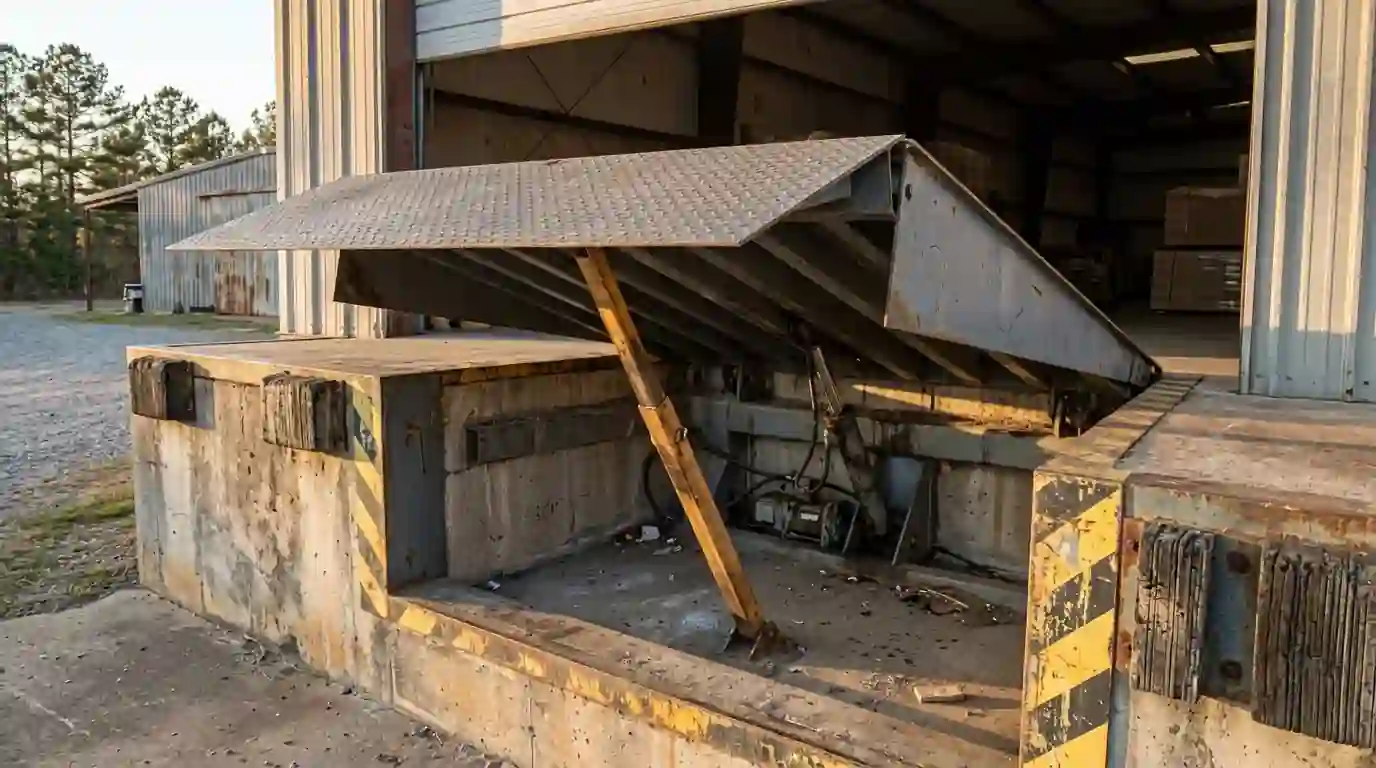
A dock leveler is a hinged steel deck set in a pit at the dock door. When a trailer backs in, the deck rises, the lip at the front extends, and the deck lowers until the lip rests on the trailer bed. Forklifts then drive across it. Trailer beds vary in height and sink as they are loaded, so the deck has to float with the trailer through the whole job.
Hydraulic levelers do this with a pump, a lift cylinder and a lip cylinder. Mechanical levelers use a large spring and a hold-down, with the operator walking the lip out. Both take heavy forklift traffic every day, and worn parts show up as a lip that will not seat or a deck that bounces. The dock door above is part of the same system, and our shop and warehouse door repair page covers it.
Cost
What shapes the cost of a dock leveler repair
We have no published range to point you to for leveler work, so here is what moves the price.
What moves the price
- Leveler type. Hydraulic repairs involve pumps, cylinders and fluid, while mechanical repairs center on springs and hold-downs.
- Part failed. A hose or fitting costs far less than a lift cylinder or power unit.
- Structural damage. A cracked deck, bent lip or broken hinge plate needs welding or replacement parts.
- Seal or shelter size. Larger openings and taller trailers need bigger pads and longer curtains.
- Access. Debris packed in the pit has to be cleared before work can start.
Leveler service
What we check on every leveler call
- Maintenance strut and safe pit access
- Hydraulic fluid level, hoses and fittings
- Lift and lip cylinders for leaks
- Velocity fuse and drop protection
- Lip hinge pin and lip plate
- Springs and hold-down on mechanical units
- Seal pads, shelter curtains and bumpers
Dock repairs we handle
Hydraulic Leveler Repair
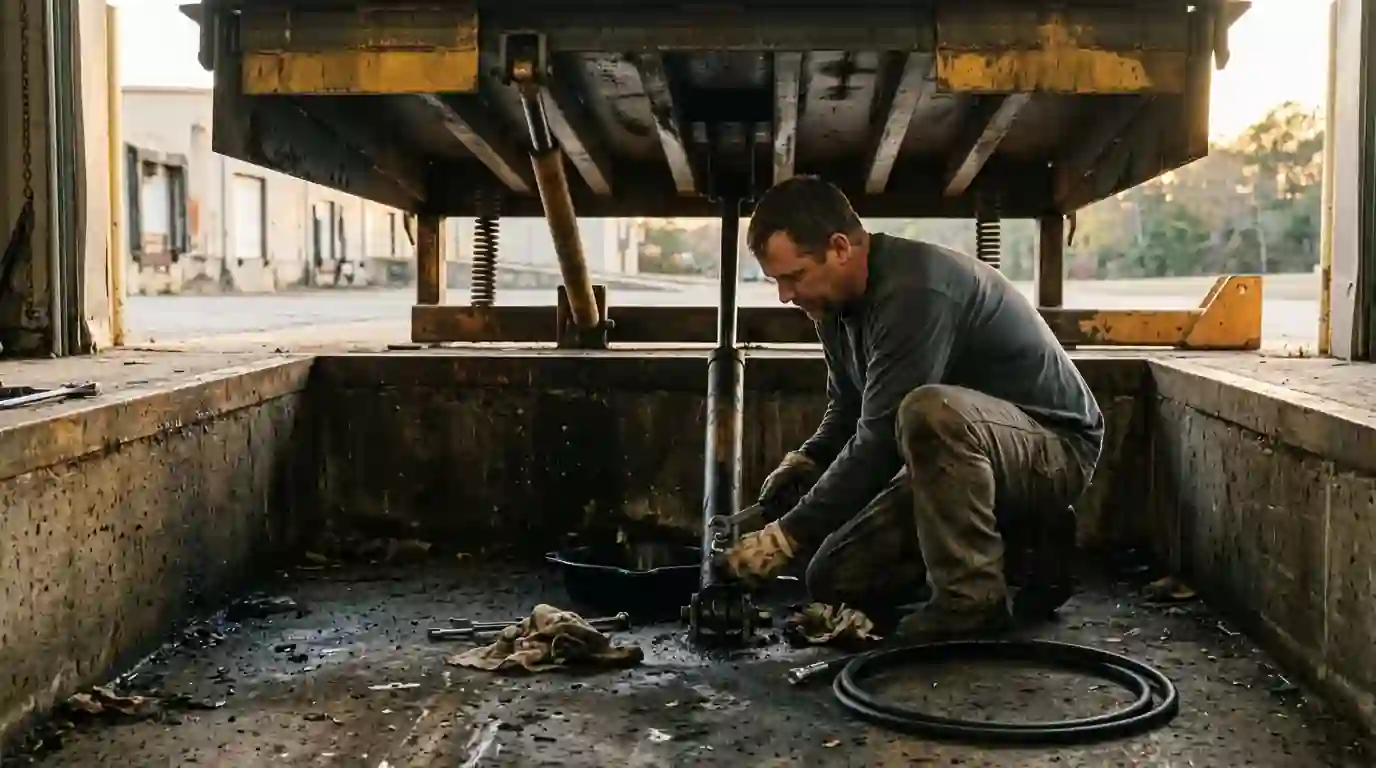
Hydraulic levelers are push-button units, which makes them popular on busy docks. Most failures sit in the hydraulic circuit: low fluid from a weeping hose, a cylinder seal that has started to leak, a motor or pump that has worn out, or a velocity fuse that has stuck. We trace the leak, replace hoses and seals, top up with the right fluid and bleed the air out. A leveler that drifts down under load is never left in service, because the velocity fuse is what stops the deck falling.
Mechanical Leveler Repair
Mechanical levelers rise on a heavy spring held down by a ratchet. The dock worker pulls a chain to release the deck, then walks the deck down to drop the lip onto the trailer. Over time the spring loses tension, the hold-down wears, and the lip hinge pin seizes with grit. We adjust or replace the spring, rebuild the hold-down and free the hinge. Many older docks still run mechanical units that are worth keeping, and the parts are simple compared with hydraulics.
Dock Seals and Shelters
A dock seal is a pair of foam pads and a head pad that the trailer presses against. A shelter is a frame with fabric curtains that wrap the trailer sides. Both keep rain, heat and insects out of the building during loading. Pads tear from trailers backing in off-center, and curtains rip at the corners. We replace worn pads and curtains, and resize the seal when the trailers you load have changed.
Dock service call
How a leveler repair runs at your dock
Take the dock out of use
We barricade the dock door, raise the deck and set the maintenance strut before anyone goes into the pit.
Diagnose the fault
Fluid level, pump, hoses, cylinders, springs, hold-down, hinges and lip are checked.
Repair the leveler
Failed parts are replaced, hydraulic systems bled, and spring tension or hold-down adjusted.
Cycle under load
The deck is cycled through its full range and the lip checked against a trailer or test height.
Docks in the county
Supplier docks out east and distribution docks in town
Mercedes-Benz plans a multibillion-dollar expansion of its Vance plant by 2030, on top of the roughly 5,800 people it employs, and the suppliers and freight yards around Vance, Cottondale, Brookwood and Coaling live on their loading docks. Those docks can turn trailers all day, which is hard on leveler hinges and seal pads. In the city itself, Tuscaloosa has grown to 114,316 people, and the grocery, retail and building-supply docks that serve a city that size run steadily year-round.
Dock trouble
Five dock leveler problems your crew will notice
Deck will not rise
On a hydraulic unit the pump runs but the deck stays put, often from low fluid, a leak or a failed valve.
Lip will not extend
The deck rises but the lip hangs down instead of reaching the trailer bed, usually a lip cylinder or hinge fault.
Deck drops when unloaded
A deck that sinks below dock level when the trailer pulls away has a failed velocity fuse or hold-down.
Oil under the pit
Hydraulic fluid pooling in the pit means a leaking hose, fitting or cylinder seal.
Daylight around the trailer
Light showing past the dock seal or shelter means torn pads or curtains that no longer seal.
Common questions
Dock leveler questions
No. A drifting deck means the hydraulics or hold-down are failing. Barricade the dock until it is repaired.
A valve in the lift cylinder that locks the deck if it starts to fall fast, such as when a trailer pulls away early.
Some can, with a retrofit kit fitted to the existing pit, but often a new hydraulic leveler is the cleaner route. It depends on the pit and frame.
On hydraulic units the lip cylinder or its circuit is usually at fault. On mechanical units a seized lip hinge pin is common.
It depends on traffic. A dock turning many trailers a day needs far more frequent checks than one used weekly.
Yes. Side pads and head pads are replaced separately, so only the torn ones need to go.
Very much. Worn bumpers let trailers hit the building and the leveler lip. Replacing them is cheap compared with the damage they prevent.
Yes. Dock doors are usually insulated sectional doors, and our commercial operator service page covers the motors that drive them.
Related work