New Garage Doors · Tuscaloosa, AL
Wood garage doors hung and refinished in Tuscaloosa
Love real wood but worried about Alabama humidity? A wood garage door lasts when it is built from a stable species, finished on every face and kept sealed. We hang new stain-grade doors and bring weathered ones back.
- Answered 24/7
- Tuscaloosa, Northport and West Alabama
- Stain-grade and refinishing
Updated October 2026
A wood garage door in Tuscaloosa needs a sealed finish on all six faces of every section, because humid summers and wet winters push moisture into any bare edge. Cedar, hemlock and mahogany are the usual species. A wood door is heavier than steel, so its springs are sized to its weight, and the finish is renewed every few years.
Wood doors
What makes a wood garage door last in a damp climate
Wood moves. It takes on water in a wet spell and gives it up in dry weather, and a garage door has more end grain and exposed edges than most of a house. Doors that hold up are built from species that move less, such as western red cedar, hemlock and mahogany, with frames glued and pinned and panels that float in their frames so they can swell without splitting.
The other half is finish. A stain-grade door often arrives raw or primed, and the finish has to cover the faces, the edges and the bottom of each section before it goes up. Skip the bottom edge of the lowest section and water wicks in from the driveway. A heavy wood door also loads the springs more than steel, which our torsion spring replacement page explains.
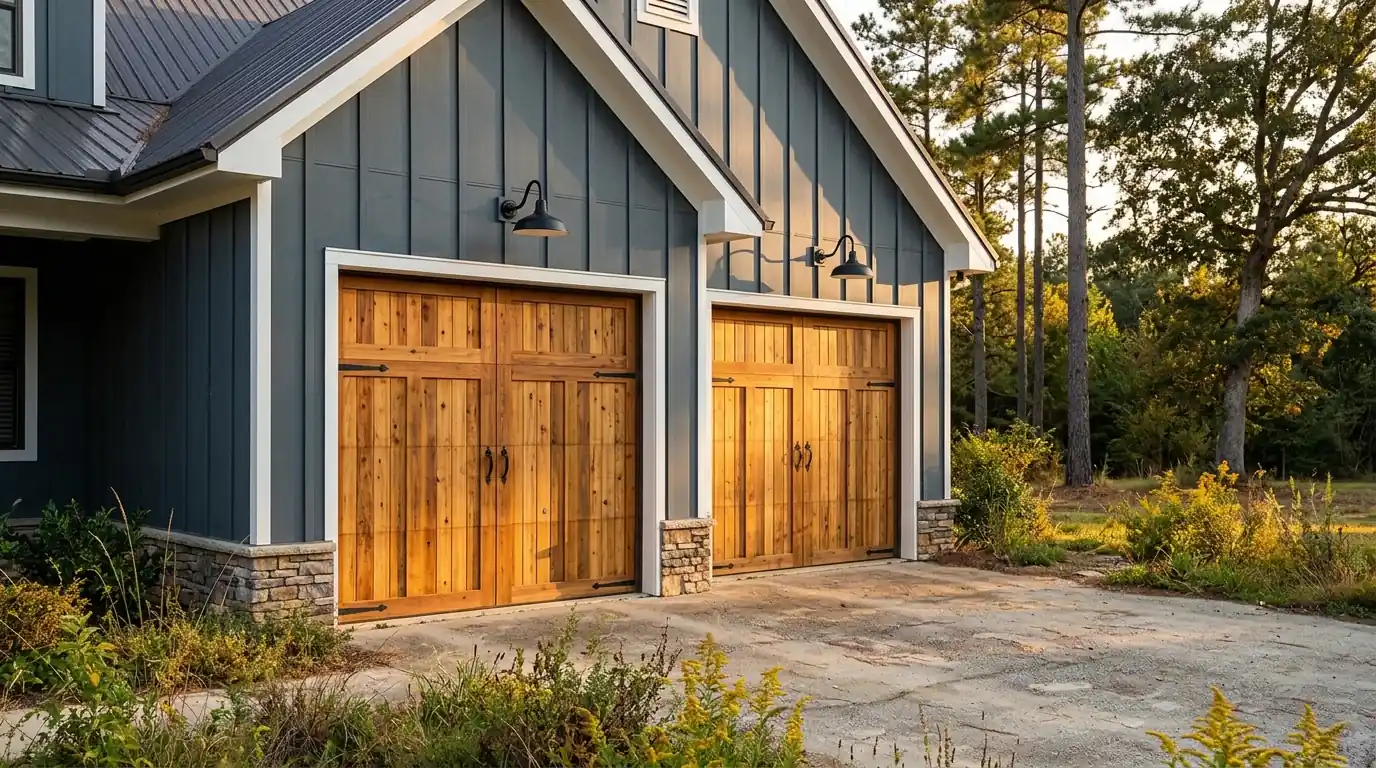
Wood or look-alike
Real wood versus wood-look steel on a West Alabama garage
| Stain-grade wood | Wood-look steel or composite | |
|---|---|---|
| Up close | Real grain that takes stain deeply | Printed or molded grain, convincing from the street |
| Upkeep | Refinish every few years | Wash and occasional touch-up |
| Weight | Heavy, springs sized to it | Lighter, often insulated |
| Humidity | Moves with the weather if not sealed | Does not swell or rot |
| Typical cost | $1,500 to $6,500 single-car (HomeGuide) | Usually less than wood |
Wood door range from HomeGuide, whose two-car range runs $2,000 to $10,000 and up.
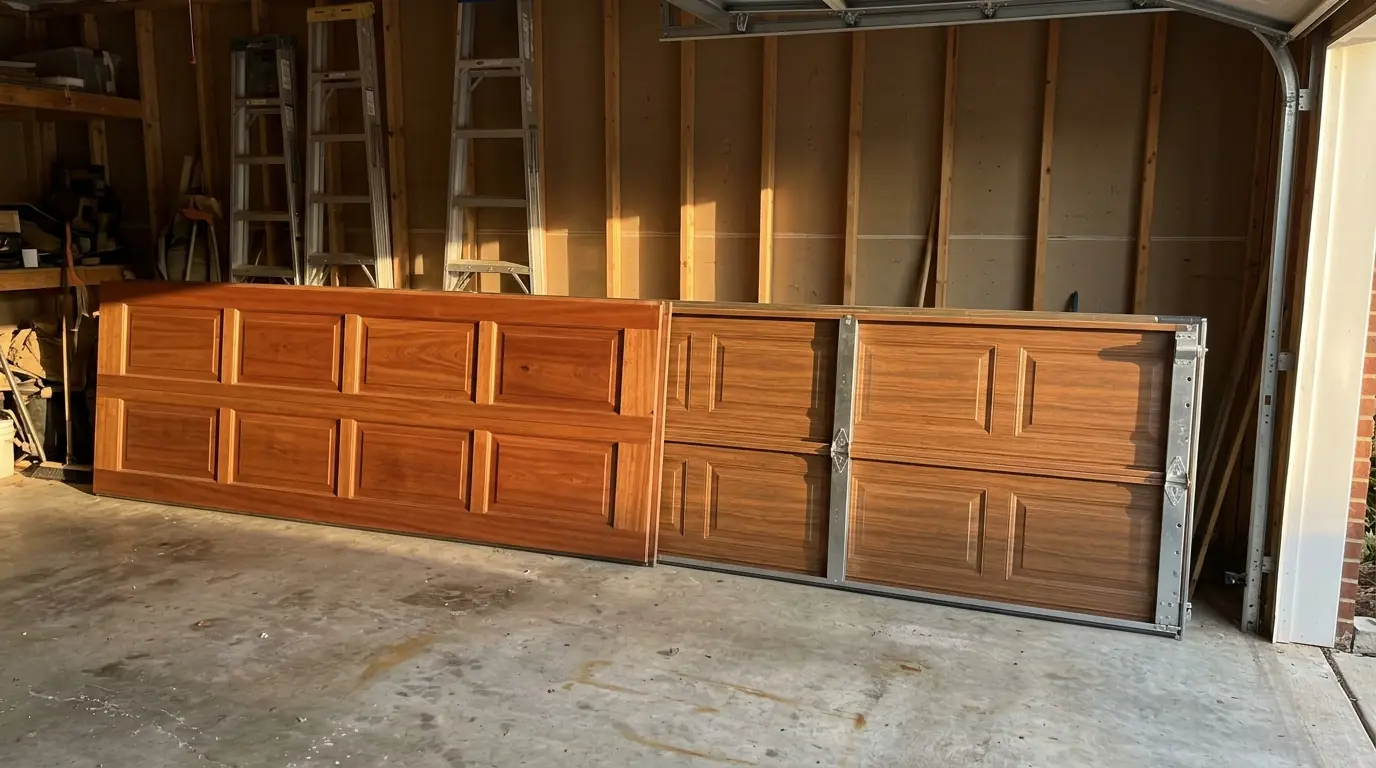
Cost
What a stain-grade wood door costs installed
HomeGuide's range for a single-car door. Two-car doors run higher.
| Job | Typical range | Source |
|---|---|---|
| Single-car wood door, installed | $1,500 to $6,500 | HomeGuide |
Planning range from HomeGuide, not our quote. We price your door once the species, design and size are settled.
What moves the price
- Species. Cedar and hemlock cost less than mahogany, and clear grades cost more than knotty ones.
- Size. A two-car door holds far more material than a single and needs heavier springs.
- Design. Custom panel layouts, carriage boards and arched tops add shop time.
- Finish. Factory-finished doors cost more up front, but a raw door still has to be finished before it goes up.
- Windows. Glass in the top section adds cost, and true divided lites add more.
New wood and old wood
Stain-Grade Wood Doors
Stain-grade means the wood is clear and even enough to show its grain under a transparent finish rather than hide it under paint. We hang cedar, hemlock and mahogany doors built as sectional doors with rail and stile frames, in raised panel, flush plank and carriage layouts. Each section is heavier than its steel equal, so we work out the finished weight with glass and finish included, then fit springs, hinges and struts to suit. Clopay and other makers we hang build wood lines in these species.
Refinishing and Sealing
A weathered wood door can often be saved if the wood is still sound. Depending on its condition, we work on the door in place or take sections down, sand back to bare wood where the finish has failed, and treat gray fibers before stain and a UV-resistant topcoat go on. The bottom edge and section joints get extra coats, since that is where water gets in. Rotted rails need repair first, and when rot runs through a section our section replacement page covers the options.
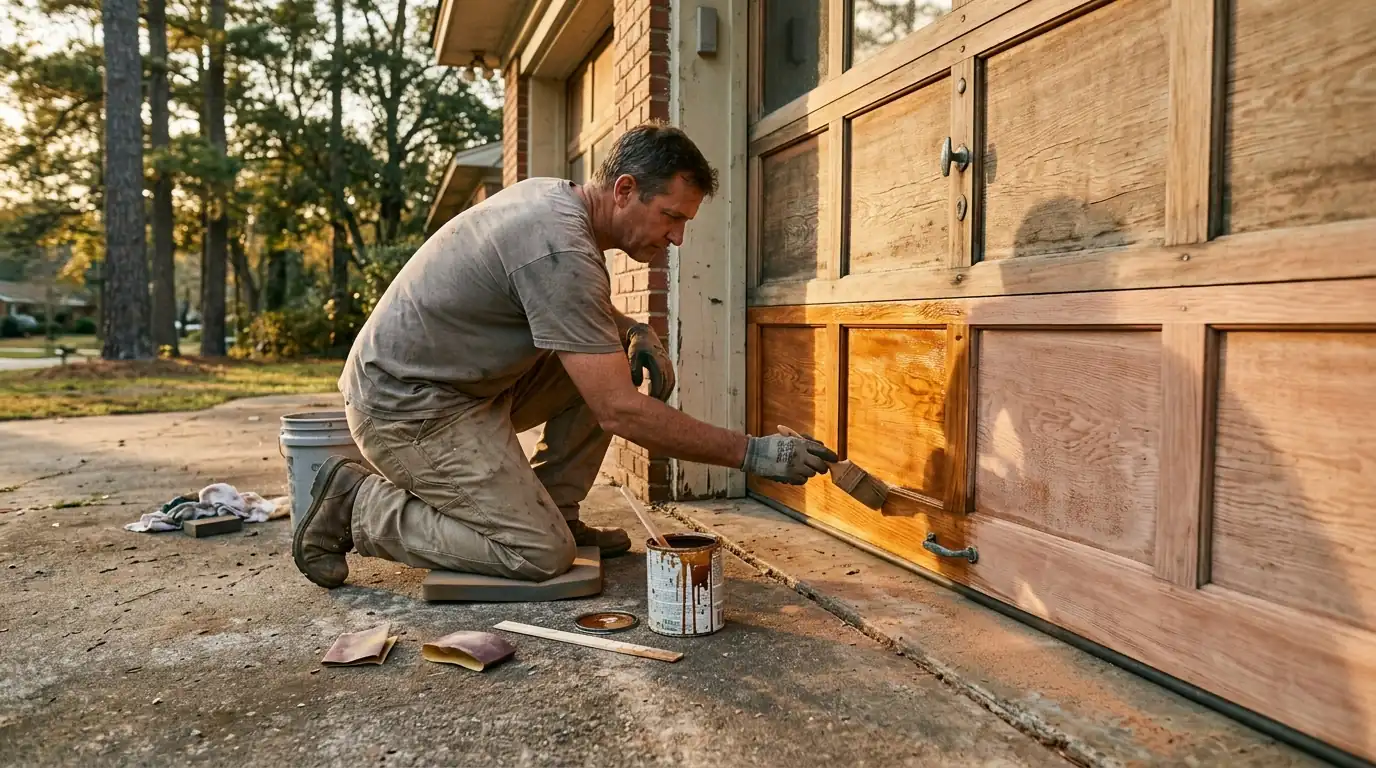
Wood door job
How a wood door is fitted or brought back
Inspect the wood
We probe the bottom rails and joints for soft spots and note where the finish has failed.
Plan the work
You hear whether the door needs a new finish, section repairs or replacing, and what each costs.
Prepare and finish
Old finish comes off, bare wood is treated, and stain and topcoat go on every exposed face.
Rebalance and test
Because finish and repairs change the weight, we check spring balance and opener force afterward.
Old streets, lake air
Wood doors in Pinehurst and around Lake Tuscaloosa
Pinehurst, listed on the National Register as a historic district in 1986, has many older homes with detached and narrow garages, and a wood door is often the honest match for the house. Keeping one there is mostly about finish. Around Lake Tuscaloosa, the 5,885-acre lake on the North River, humid air off the water slows drying after rain, so bottom rails stay damp longer and finishes break down faster than on a door in town. We set refinishing intervals by where the door sits, not by a fixed calendar.
Wood and wood-look doors we hang from Clopay, Amarr, C.H.I. Overhead Doors and Hormann, along with openers that lift them.
- LiftMaster
- Chamberlain
- Genie
- Craftsman
- Clopay
- Amarr
- Wayne Dalton
- C.H.I. Overhead Doors
- Raynor
- Haas Door
- Hormann
- Martin Door
- Linear
- Marantec
When wood needs attention
Five signs a wood door needs refinishing or more
Gray, chalky surface
Sun has broken down the finish and the top layer of wood fibers, leaving a dull gray that stain cannot reach.
Dark band along the bottom
A dark stain on the lowest section means water is wicking up from the driveway into unsealed end grain.
Peeling or flaking finish
Film finishes lift in sheets when moisture gets behind them, usually starting at panel corners and joints.
Hairline splits in panels
Fine cracks along the grain show a panel that dried out and shrank, or one locked too tight in its frame.
Door sticks or rubs
Sections that swell after rain can bind against the stop molding, and the opener strains to move them.
Common questions
Wood garage door questions
Western red cedar and mahogany move less with moisture than most species and take stain well. Hemlock is a steadier, lower-cost choice when it is kept sealed.
It depends on sun and finish. A door facing the afternoon sun may need it every couple of years, a shaded one less. Graying and peeling tell you when.
Rarely in a way that looks good. Paint sinks into the grain, so stripping it leaves blotches. Repainting or a new door is usually the better choice.
Yes. Every face and edge, including the bottom of the lowest section, should be sealed first. Those faces are hard to reach once the door is up.
It needs one rated for the weight. A heavy wood double door is a good reason to choose a strong belt-drive unit rather than a light-duty chain drive.
Small soft spots can be cut out and filled with epoxy. Rot running through a rail or across a section usually means a new section.
Swollen sections press against the stop molding. Once dry the door frees up, but repeated sticking means the finish is letting water in.
Not poor, just higher upkeep. Lake air keeps wood damp longer, so refinishing comes sooner. A composite carriage door is the low-upkeep alternative.
Related work