Springs, Cables & Hardware · Tuscaloosa, AL
Garage door tune-up and safety check for Tuscaloosa homes
Door getting louder, slower or heavier every month? A tune-up catches that wear before it becomes a stuck door. We check the spring balance, tighten and lubricate the hardware, and test every safety setting on the opener.
- Answered 24/7
- Tuscaloosa, Northport and West Alabama
- Balance, hardware and safety
Updated October 2026
A garage door tune-up in Tuscaloosa covers 3 systems at one visit: spring balance, the moving hardware and the opener's safety settings. We release the opener and test the door by hand, tighten and lubricate hinges, rollers and bearings, then set the force and test the auto-reverse. Nothing is replaced unless you approve it.
Preventive service
What a tune-up catches before it turns into a repair
Most garage door breakdowns build slowly. A spring loses a little tension each year, a roller bearing dries out, a hinge bolt backs off, and the opener quietly pushes harder to make up the difference. By the time the door stops, two or three parts have usually been wearing on each other for months.
A tune-up resets that chain. The door is balanced, the moving parts are tight and lubricated, and the opener is set to the door it actually pulls. A part past adjusting, such as a flat-spotted roller, is priced and left to your call. Worn rollers swapped early, covered on our quieter rollers page, take load off both the springs and the opener.
On the checklist
Seven checks in every Tuscaloosa tune-up
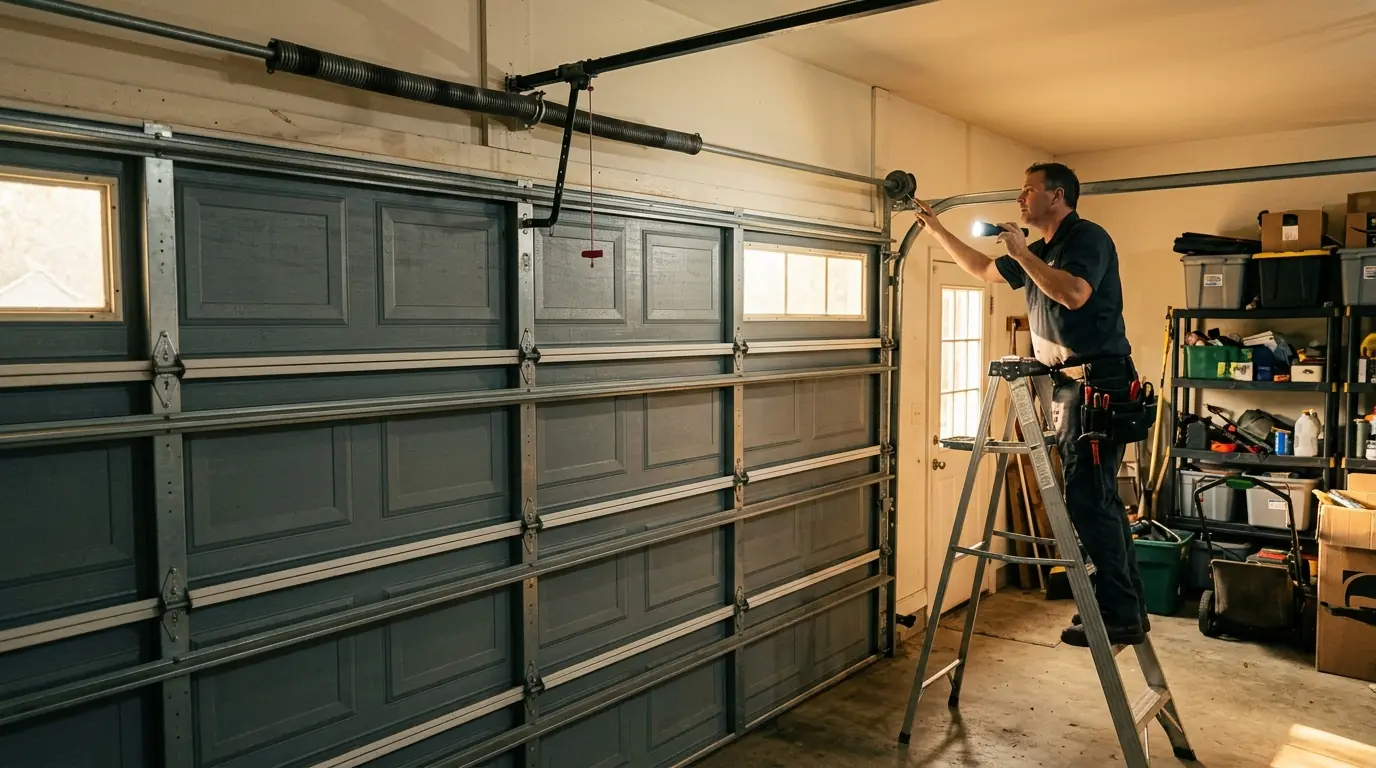
- Balance test with the opener released
- Springs, cables and drums inspected for wear and rust
- Hinge, track bracket and bearing plate bolts tightened
- Rollers, hinges and bearings lubricated, tracks wiped clean
- Bottom seal checked for gaps, cracks and flattening
- Opener force and travel limits set to the door
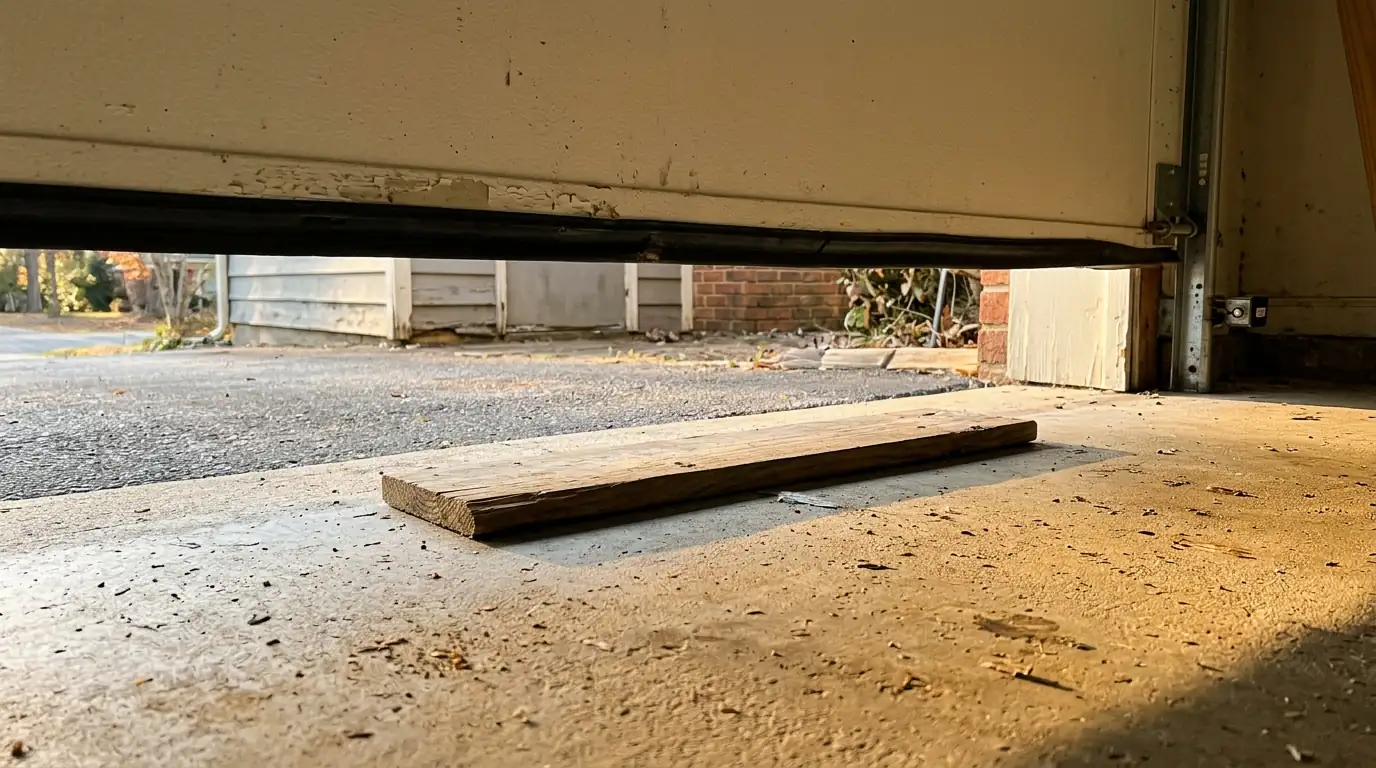
- Photo eye and auto-reverse test with a board under the door
When to book
Signs your door is overdue for a tune-up
Louder than it used to be
Squeaks and pops that crept in over months usually mean dry bearings, loose hinges or worn rollers.
Uneven gap at the bottom
One corner lands before the other, or a strip of daylight shows under one side once the door is closed.
A slower, labored climb
The opener sounds strained and the door takes longer to rise than it did a year ago.
Rust on springs or cables
Orange flaking on the coils or at the bottom brackets shows humidity working on the steel.
Shaking in the tracks
The door shudders or the tracks vibrate as it travels, a sign of loose brackets or worn rollers.
What the tune-up covers
Spring Balance Check
We pull the release cord with the door closed, lift the door by hand to waist height and let go. A balanced door stays put or drifts slowly. One that drops has springs losing tension, and one that climbs on its own is wound too tight. Either way the opener is doing work the springs should carry, which shortens its life. Small corrections are made a quarter turn at a time, and a rust-pitted spring is priced, not swapped without your say.
Hardware Tightening and Lubrication
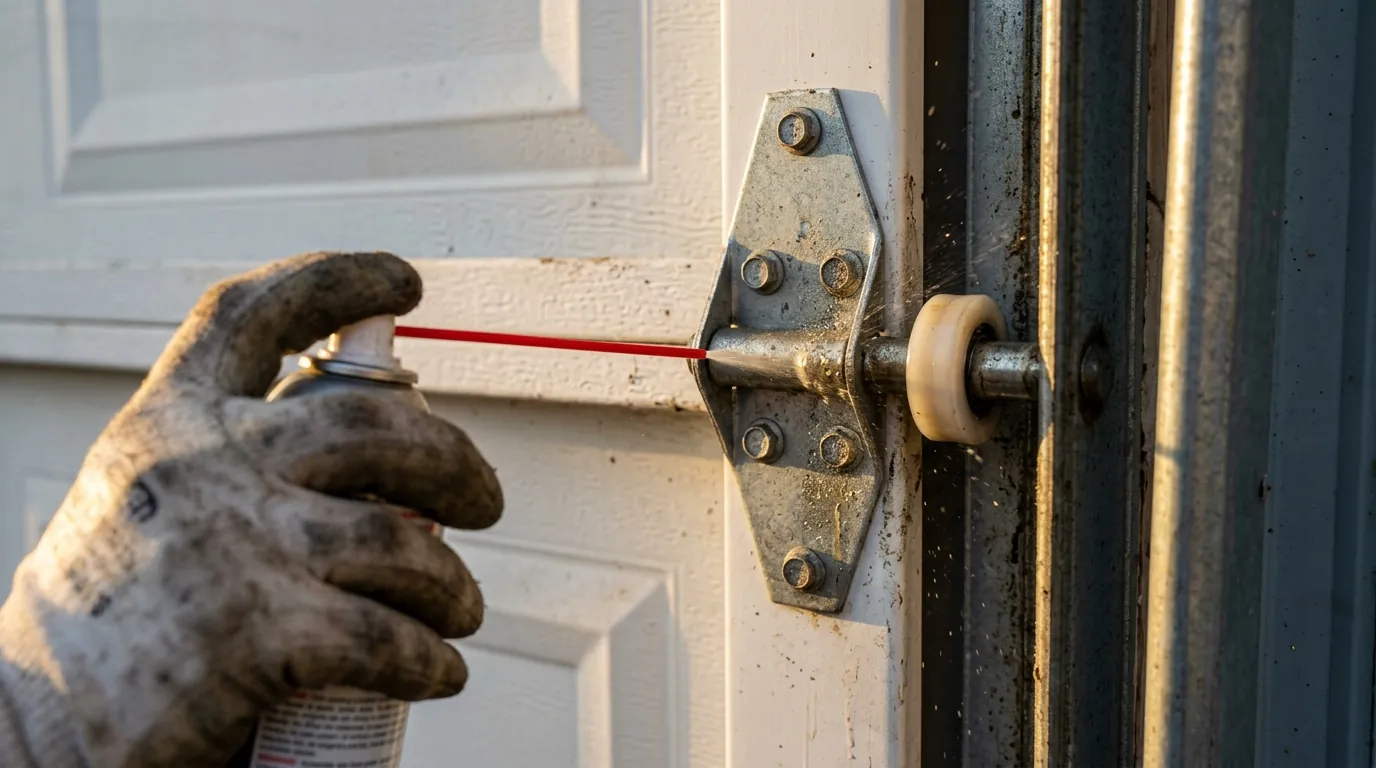
A sectional door flexes at every hinge on every cycle, and that vibration slowly backs out lag screws and carriage bolts. We go over each hinge, the track brackets and the bearing plates with a socket. Then garage door lubricant goes on the hinge pins, roller bearings, shaft bearings and spring coils. Tracks get wiped, not greased, because grease in a track collects grit and makes rollers skid instead of turn. Sealed nylon rollers need only a light touch.
Opener Safety Test
This is the check that protects people and cars. We lay a flat board under the door and close it, and the door must touch the board and reverse. We break the photo eye beam by hand while the door is closing, and it must reverse again. Then force and travel limits are set so the door seals against the floor and stops. Trouble with the eyes themselves is covered under sensor repair.
On the visit
How a tune-up visit runs from start to finish
Watch it run
We open and close the door twice on the opener and listen for where the noise and hesitation come from.
Test by hand
With the opener released, we check balance, feel each section for binding and look over springs, cables and drums.
Tighten and lubricate
Hinges, brackets and bearing plates are snugged up, then the pivot points and bearings get fresh lubricant.
Reset and report
Force, limits, photo eyes and auto-reverse are set and tested, and you get a plain list of anything worn.
Tuscaloosa timing
When a tune-up does the most good in Tuscaloosa
Two stretches of the year are worth planning around. Tuscaloosa County's main severe-weather season runs from March through May, with a second one from early November to mid-December, and a door already out of balance is the one most likely to bind or jump its track when a storm knocks the power out. Summer is the other. Tuscaloosa's mean daily highs sit above 91 degrees in July and August, with about 71 days a year at 90 or hotter, and that heat dries out lubricant while the opener fights a stiff door. A late-winter or early-fall visit covers both.
Cost
What a garage door tune-up costs
Published ranges for a standard residential tune-up.
| Job | Typical range | Source |
|---|---|---|
| Tune-up with inspection and lubrication | $100 to $250 | HomeGuide |
| Professional tune-up, Angi | $100 to $240 | Angi |
Planning ranges from the publishers listed, not our quotes. You hear our price before any work starts.
What moves the price
- Door size. A double door has more hinges, rollers and track to work through than a single.
- Number of doors. Two or three doors in one garage are usually tuned at the same visit.
- Opener type. Wall-mount and battery-backup openers have extra settings and a battery to check.
- Condition. A door that has gone years without service needs more cleaning and tightening.
- Parts found worn. Rollers or a seal flagged during the check are priced separately.
Time on site
How long a tune-up keeps the door out of use
The door is out of use only while it is disconnected for the balance test and while the opener is reset. A first tune-up on a neglected door runs longer, because old grease has to come out of the bearings before fresh lubricant goes on. A worn part found along the way is noted, and the door goes back into use unless running it would be unsafe.
Common questions
Tune-up questions
Once a year suits most homes. A door that is the family's main way in and out does better with two visits.
Yes. A garage door lubricant on hinges, roller bearings and spring coils every few months helps. Skip the tracks and leave spring adjustment alone.
No. A broken spring or stripped opener gear needs a repair. A tune-up keeps a working door working and finds parts close to failing.
Yes. We set force and travel limits, test the photo eyes and auto-reverse, and check the rail, trolley and drive for wear.
That the door reverses when it meets something low. If it presses down instead, the force or limits need resetting.
Usually. Builder-grade hinges and rollers loosen early, and opener settings are often left at factory defaults rather than set to the door.
Heat thins and dries lubricant on the hinges and bearings faster, so metal parts rub. Fresh lubricant and tightened hardware quiet most doors.
Small tension corrections are part of the tune-up. A spring that is rusted, stretched or near the end of its cycles is priced for replacement instead.
Related work
Other springs, cables & hardware jobs
Garage Door Roller Replacement
Noisy, wobbly or seized garage door rollers in Tuscaloosa?
Read about itGarage Door Weather Seal Replacement
Rain, leaves or daylight getting under your Tuscaloosa garage door?
Read about itGarage Door Cable Replacement
Garage door cable frayed, snapped or off the drum in Tuscaloosa?
Read about it