Springs, Cables & Hardware · Tuscaloosa, AL
Garage door weather seals that keep Tuscaloosa rain out
Water running under the door or light showing at the sides? The seals have shrunk, torn or flattened. We fit a new bottom seal in the right profile for your door's retainer, renew the side and top stops, and add a threshold where the slab needs one.
- Answered 24/7
- Tuscaloosa, Northport and West Alabama
- Bottom, side and threshold seals
Updated October 2026
Garage door weather seal replacement in Tuscaloosa covers three parts: the rubber or vinyl bottom seal in the door's retainer, the stop molding along the sides and top of the opening, and an optional threshold seal fixed to the slab. The bottom seal fails first, usually within a few years, because it is crushed on every close.
Weather seals
Three seals, three jobs around the door
A garage door has gaps at every edge, and each one has its own seal. The bottom seal slides into an aluminum or steel retainer along the bottom section and squashes against the slab. The side and top stops are flexible flaps on the jamb molding that press against the face of the door. A threshold is a raised rubber strip glued to the floor where the slab is uneven or water runs toward the garage.
Seals harden in summer heat, crack in cold snaps and get chewed by mice. Once they go, rain and leaves blow in, insects find a way under, and an attached garage loses heat and cooling to the outside. Seal work fits naturally alongside a lube and safety check, since both are about keeping the door in shape.
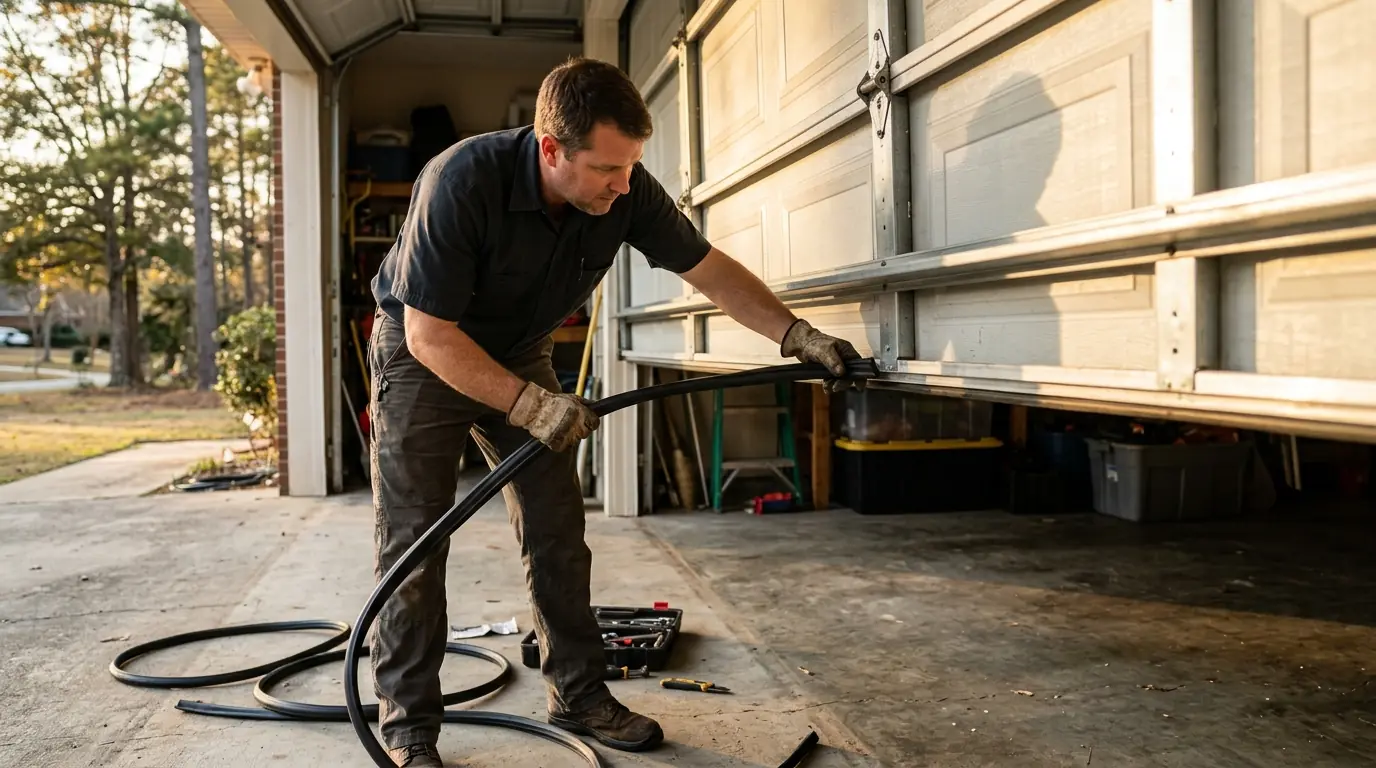
Seal job
What a weather seal replacement includes
- Measuring the retainer channel to match the seal profile
- Removing the old bottom seal and cleaning the retainer
- Fitting a new bottom seal cut to the door width
- Replacing worn side and top stop molding
- Gluing a threshold seal where the slab needs one
- Resetting the opener's down limit to the new seal
- Testing the reverse with a board under the door
Worn seals
Signs the seals around your door have failed
Daylight at the bottom
A line of light under the closed door, often wider in the middle or at one corner.
Water on the slab
Puddles inside the door after rain, or a damp strip just inside the opening.
Cracked or flattened rubber
The bottom seal is split, stiff, or pressed flat so it no longer flexes to the floor.
Leaves and insects inside
Leaves, pine straw or bugs collecting along the inside of the door after windy days.
Gaps at the side stops
Light or drafts along the sides because the stop flap has shrunk or pulled away.
The three seals
Bottom Seal Replacement
Bottom seals come in several profiles, including T-end, bead-end, bulb and J-type, and the one that fits depends on the retainer channel on your door. We measure the channel before fitting anything, because a seal that is close but not right slides out or pinches. If the retainer itself is bent or rusted through, it is replaced first. After the new seal goes on, the opener's down limit is reset so the door compresses the seal without pushing into the floor.
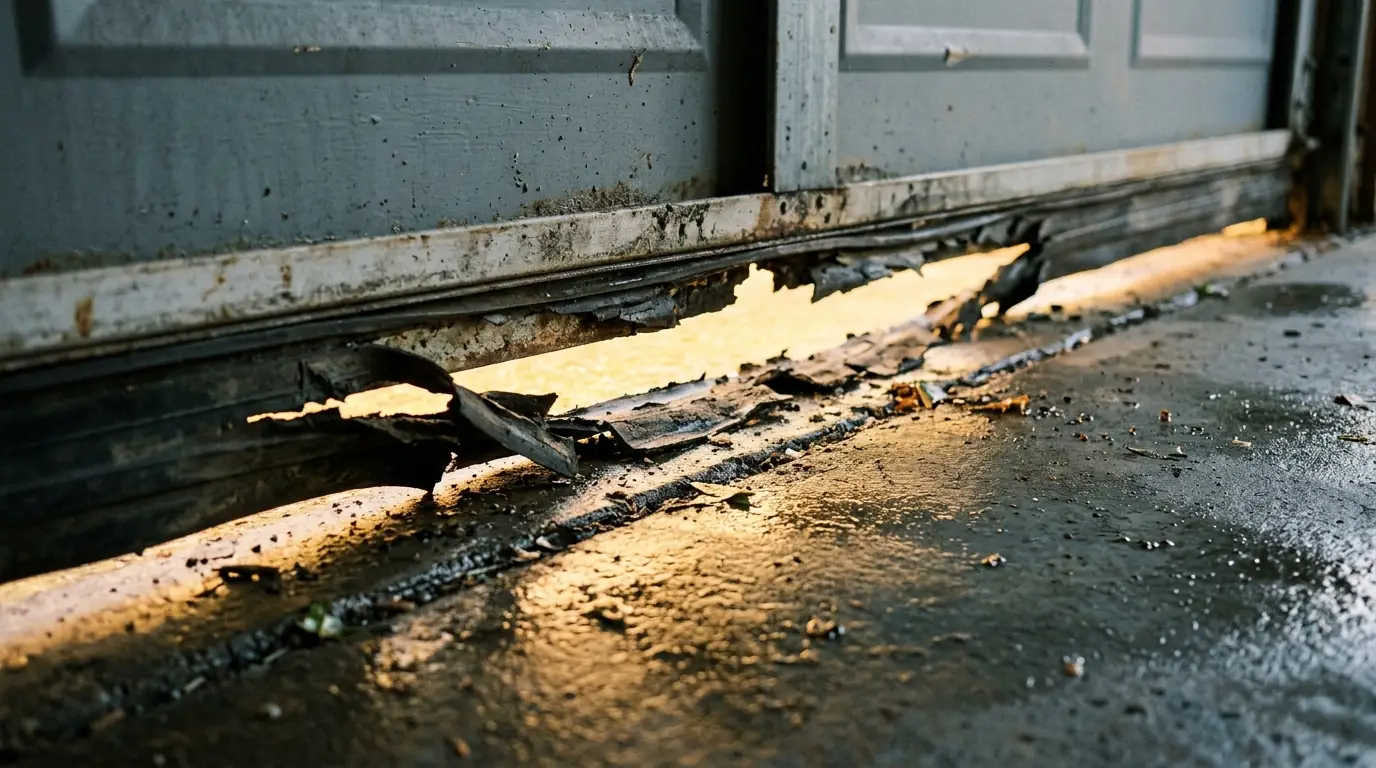
Side and Top Stop Seal
Stop molding runs up both jambs and across the header, and its flexible flap presses against the door as it closes. Older wood stop with a vinyl flap tends to crack and pull away, and painted-over flaps lose their flex. We replace it with vinyl stop set so the flap just touches the door when closed. Set too tight, it drags and wears the paint; set too loose, it leaves a draft line down each side.
Threshold Seal
A threshold seal is a raised rubber strip glued to the slab under the closed door, giving the bottom seal something to press against. It helps on uneven slabs, on slabs that slope back toward the garage, and on driveways that send water to the door. It is not a dam for heavy flooding. We clean and dry the concrete before gluing and press it down along its length, so it stays put under car tires.
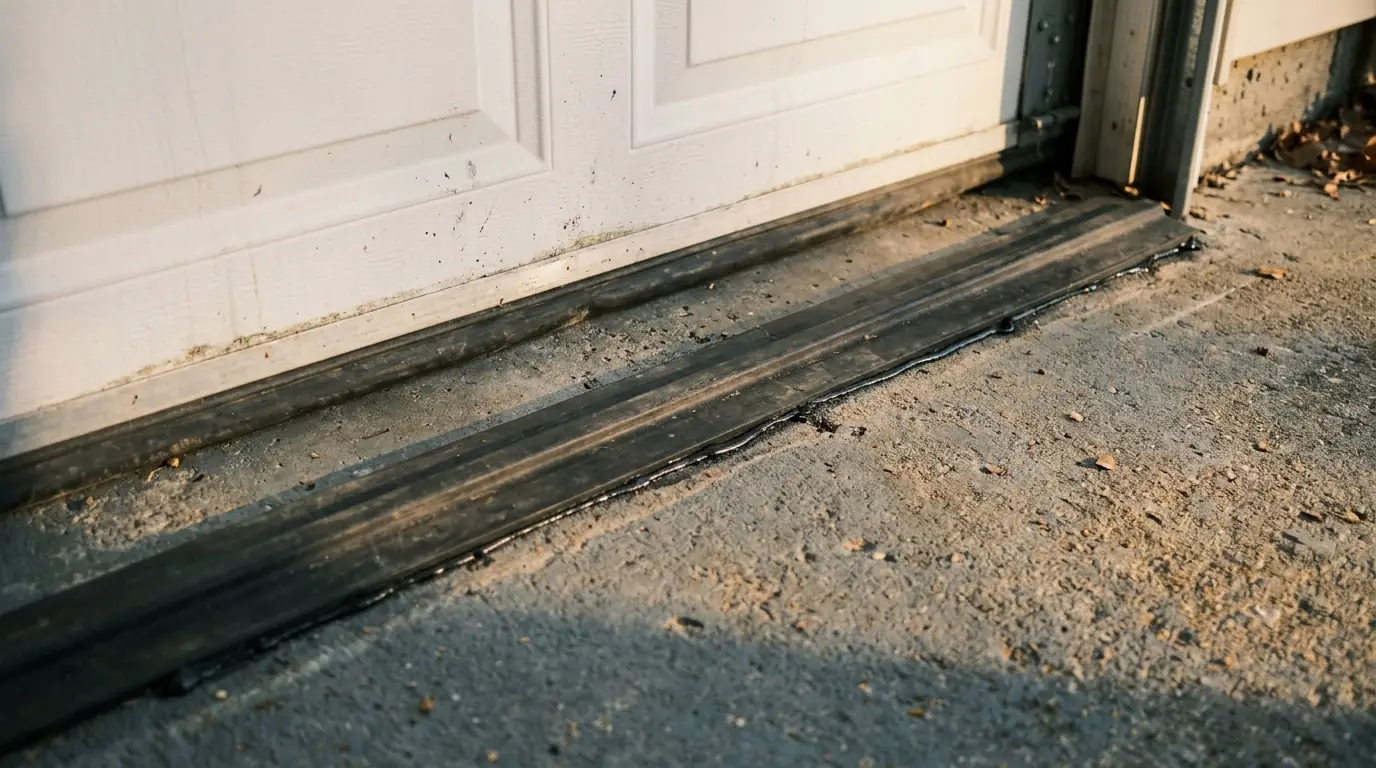
Seal visit
How the seals get measured, fitted and tested
Look for the leak
We check where light and water get in with the door closed, and measure the retainer channel.
Strip the old seals
Old bottom seal and worn stop come off, and the retainer is cleaned so the new seal slides in.
Fit the new seals
The bottom seal is cut to width, the stop molding fixed to the jambs, and a threshold glued if needed.
Set the opener
The down limit is set to the new seal, and the auto-reverse is tested against a board.
Rain and cold
Tuscaloosa rain and freezing mornings
Tuscaloosa averages 53.52 inches of rain a year over 117.7 precipitation days, and February is the wettest month at 5.37 inches. A torn bottom seal lets some of that run straight onto the garage slab. Cold works on the seals too. Lows reach freezing on about 46 days a year, with a January mean minimum of 35.7 degrees, and stiff winter rubber can stop flexing to the floor and crack where it folds, so a seal that sealed in October can leak by February.
Cost
What new garage door weather seals cost
Published ranges for weatherstripping work on a garage door.
| Job | Typical range | Source |
|---|---|---|
| Complete garage door weatherstripping replacement | $200 to $600 | HomeAdvisor |
| Weatherstripping added or replaced | $100 to $200 | Fixr |
Planning ranges from the publishers listed, not our quotes. You hear our price before work starts.
What moves the price
- Which seals. A bottom seal alone costs less than bottom, sides, top and threshold together.
- Door width. A double door needs twice the length of bottom seal and threshold.
- Retainer condition. A bent or rusted retainer has to be replaced before a new seal will hold.
- Stop material. Vinyl stop molding costs more than basic wood stop but lasts longer.
- Slab condition. An uneven or cracked slab may need a threshold to close the gap.
Simple jobs
Seal work you can do, and when to call us
Fine to do yourself
- Close the door on a sunny day and look for light from inside.
- Wipe the bottom seal clean so it does not stick to the slab in cold weather.
- Clear leaves and grit from the threshold area.
Leave these to a technician
- Removing a bottom retainer bolted near the cable brackets.
- Setting the opener's down limit after a thicker seal goes on.
- Adjusting stop molding so it seals without dragging the door.
Common questions
Weather seal questions
It depends on the retainer channel. Bring us the old seal or a photo of its end, and we will match the profile.
It stops most rain. If the driveway slopes toward the door, a threshold seal helps, but neither one stops flooding.
A thicker seal changes where the door meets the floor. The opener's down limit needs resetting so the reverse test still passes.
Yes. They chew through hardened or torn corners easily. A new seal and tight side stops close most gaps.
No. It is low and rounded, and cars roll over it. It needs a clean, dry slab to stay glued.
Yes, especially for an attached garage. Drafts, dust and insects come in along the sides as easily as under the door.
No. Stacked seals stop the door closing evenly. The old seal comes out and the retainer is cleaned first.
If the door bottom is not level, a cable or track issue may be the cause. Our lift cable replacement page explains it.
Related work