Openers & Access · Tuscaloosa, AL
Photo eye sensor repair for Tuscaloosa garage doors that will not close
Door heads down, then bounces back up with the opener light flashing? The photo eyes near the floor are not seeing each other. We find out whether it is alignment, a damaged wire or a failed eye, fix it, and test that the door reverses when it should.
- Answered 24/7
- Tuscaloosa, Northport and West Alabama
- Alignment, wiring and new eyes
Updated October 2026
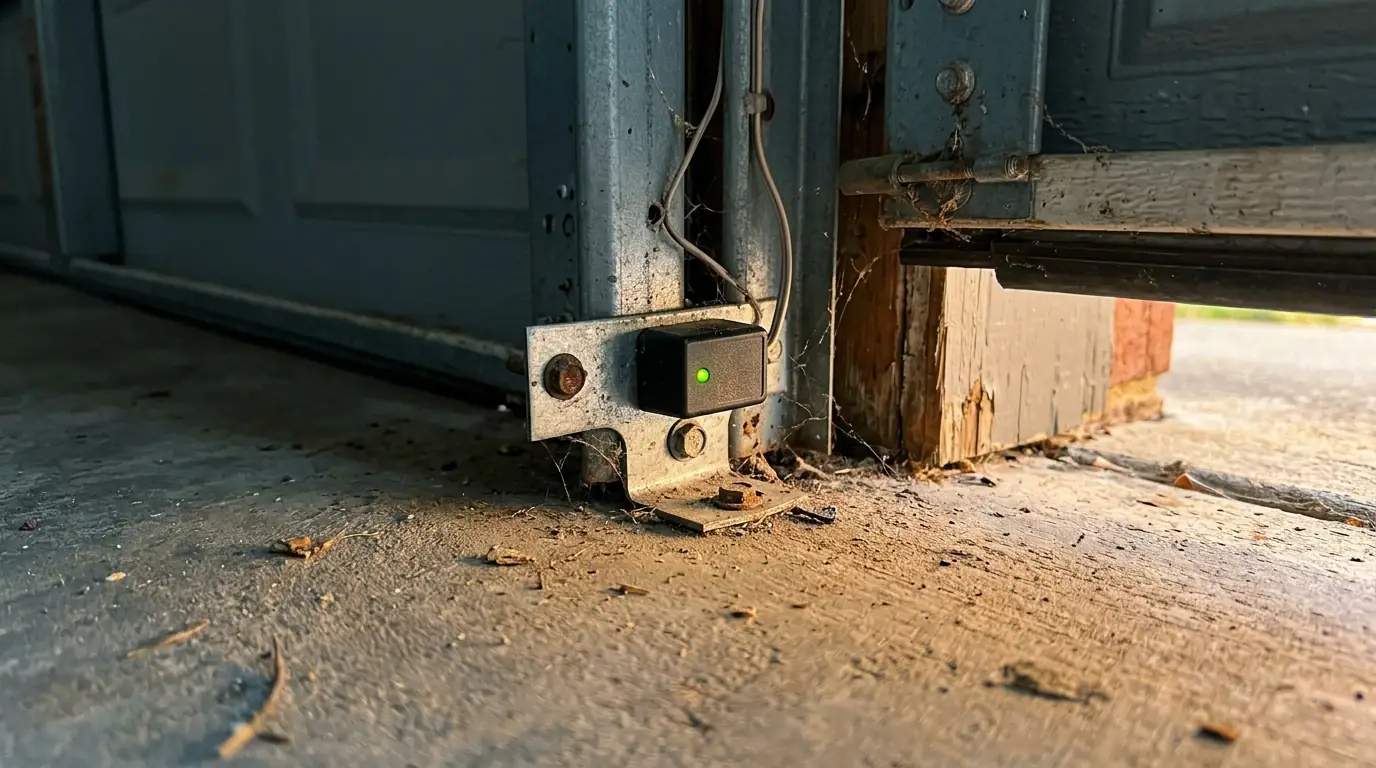
Garage door sensor repair in Tuscaloosa usually comes down to the 2 photo eyes mounted about 6 inches above the floor on each side of the door. If one is bumped out of line, its lens is dirty or its thin wire is damaged, the opener will not close the door. Each cause has a different fix.
Symptoms
How a sensor fault shows itself
Door reverses right away
You press the button, the door drops a few inches or a few feet, then heads straight back up.
Opener light flashes
The light on the motor head blinks, often ten times on LiftMaster and Chamberlain units, instead of closing.
Closes only with button held
Holding the wall button down forces the door closed, but a single press or the remote will not.
One eye light is out or flickering
One of the two small LEDs on the eyes is dark or blinking, while the other stays steady.
Fault comes and goes
The door closes fine some days and refuses on others, often worse on hot, sunny afternoons.
Safety sensors
Why the photo eyes stop the door from closing
Every opener made for US homes since 1993 must have a way to reverse a closing door if something is in its path. The photo eyes are that system. One eye sends an invisible beam across the opening, the other receives it, and if the beam breaks while the door is closing, the opener reverses. When the beam cannot get through at all, the opener simply refuses to close.
That makes the eyes the most common reason a door will not shut, and they are never something to bypass. Taping them together or mounting them high on the ceiling defeats the only thing that stops a door coming down on a child, a pet or a car. A door that reverses with the eyes working is a different problem, usually force or binding, covered on our general door repair page.
On the visit
How we trace a sensor fault
Read the lights
We check both indicator LEDs and the opener's blink code to see whether the eyes have power and a signal.
Check alignment
Both brackets are checked for bends, then the eyes are set at the same height facing each other squarely.
Test the wiring
We follow the low-voltage wire from each eye to the opener and test for breaks, staples and corrosion.
Prove the reverse
We close the door and break the beam by hand, then lay a board under it to confirm the auto-reverse.
Sensor repairs we make
Sensor Alignment
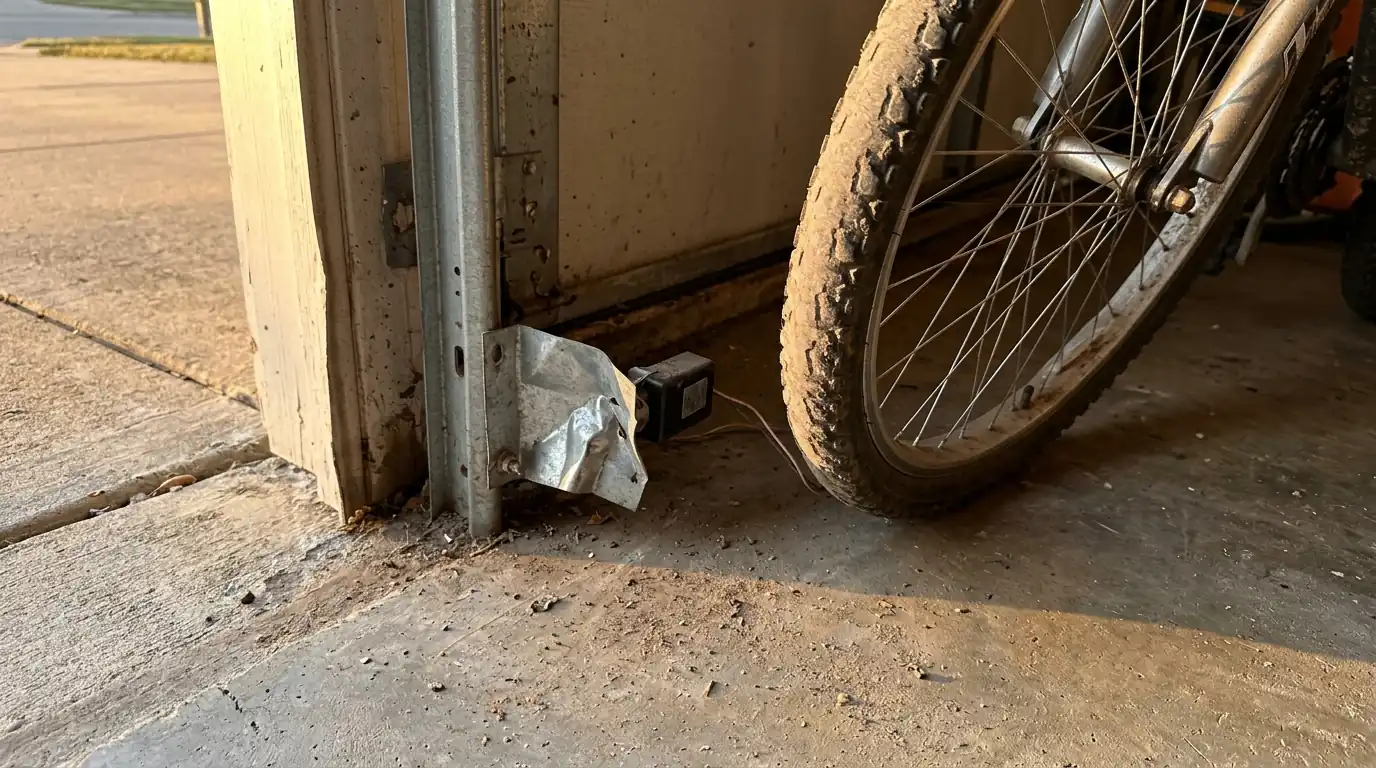
Most sensor calls are alignment. A bike handlebar, a trash can or a kick from a child is enough to twist the thin sheet-metal bracket, and the receiving eye's light starts to blink or goes out. We straighten or replace the bracket, set both eyes at the same height and aim them so each indicator holds steady. If the sending eye faces west into the afternoon sun, we swap the two sides so the receiver is shaded from the glare.
Sensor Wire Repair
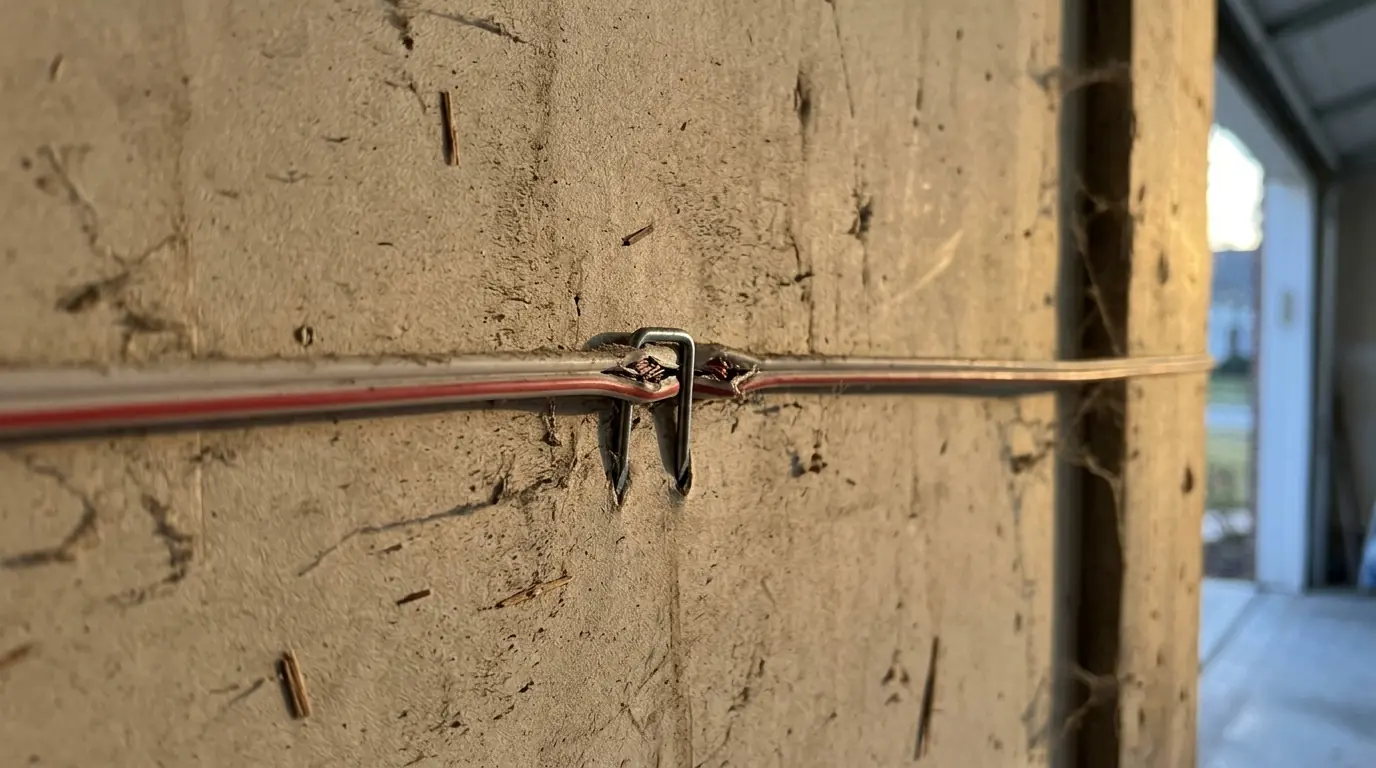
The eyes run on a thin two-strand wire stapled along the wall and up to the opener. Staples driven through the wire, a mower cord that snagged it, or a mouse can cut one strand, and the fault comes and goes as the wire flexes. We test each run, splice the break with proper connectors or replace the run, and fasten it with insulated staples. Bare twisted splices wrapped in tape fail again within a season.
Sensor Replacement
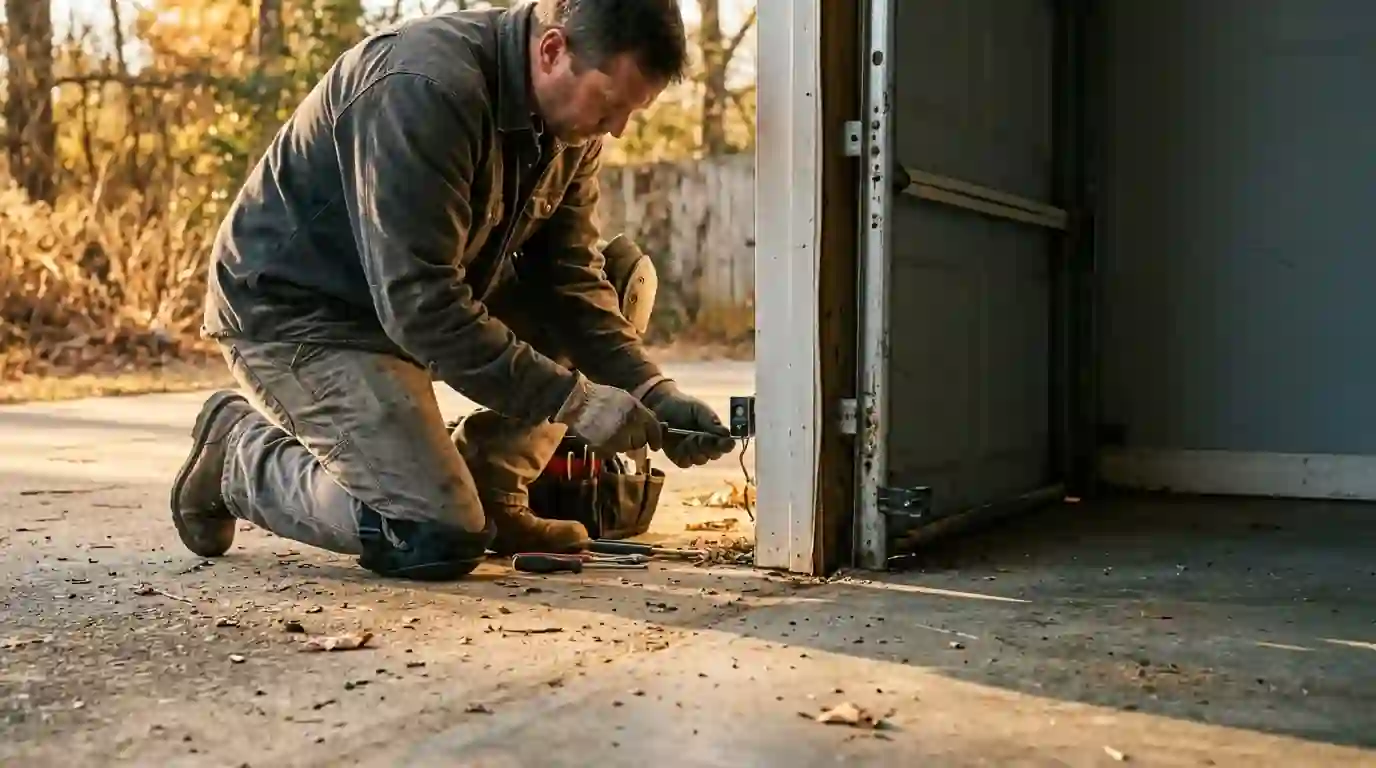
When an eye has power and is aimed true but still will not hold a steady light, the eye itself has failed. Cracked lenses, moisture inside the housing and corroded terminals are the usual causes. Eyes are made to work with their own opener brand, so we fit a matched pair rather than mixing parts. If the opener is old enough that its eyes are no longer made, we talk through whether a repair or a new opener makes more sense.
Tuscaloosa sensors
What muggy summers and cold snaps do to the eyes
Tuscaloosa's weather is hard on parts that sit six inches off a concrete floor. The muggy season runs roughly from late May to late September, with July averaging about 17 muggy days, and that damp air condenses inside eye housings and corrodes the screw terminals where the wire connects. Winter brings the opposite trouble. Lows reach freezing on about 46 days a year, and a cold slab can fog a lens or make an aging eye flicker until the garage warms up. We clean terminals and check for moisture at every sensor call.
Cost
What a garage door sensor repair costs
Published ranges for the two most common sensor jobs.
| Job | Typical range | Source |
|---|---|---|
| Sensor realignment | $150 to $250 | HomeAdvisor |
| Faulty sensor replaced | $125 to $300 | HomeGuide |
Planning ranges from the publishers listed, not our quotes. You hear our price before work starts.
What moves the price
- Alignment or replacement. Re-aiming eyes on sound brackets is a smaller job than new eyes.
- Wire condition. A long run with several breaks may be replaced rather than spliced.
- Opener brand. Eyes must match the opener, and some older models need adapter kits.
- Bracket damage. Bent or rusted brackets are replaced along with the eye.
- Underlying fault. A door that also binds needs its rollers or track looked at too.
Quick checks
Sensor checks you can make before calling
Fine to do yourself
- Wipe both lenses with a soft cloth and clear anything in the beam path.
- Look at both indicator lights and note which one is off or blinking.
- Hold the wall button down to close the door if you need it shut tonight.
Leave these to a technician
- Bypassing the eyes or mounting them up high out of the way.
- Cutting into the opener's terminal wiring to test the circuit.
- Raising the force setting to make a reversing door stay down.
Common questions
Sensor repair questions
On many LiftMaster and Chamberlain openers, ten flashes means the photo eyes are blocked or misaligned. Clean and align them first.
On LiftMaster and Chamberlain units the sender shows an amber light and the receiver a green one. Keep the receiver out of direct sun.
No. Eyes are matched to the opener's brand and signal. A mismatched pair often powers up but never lets the door close.
It works as a stopgap, but the eyes are not protecting anyone while you do it. Watch the door all the way down.
No more than six inches above the floor, so they catch a small child or pet. Both should sit at the same height.
Paint on a lens or a bracket nudged while painting is the usual cause. Clean the lens and check that both lights are steady.
Yes. Mice chew the thin low-voltage wire along the wall, and a single cut strand stops the door closing.
No. Reversing at touchdown with steady eye lights is a travel limit or force setting, not a sensor fault.
Related work
Other openers & access jobs
Garage Door Opener Repair
Opener humming, blinking or dead in Tuscaloosa?
Read about itGarage Door Remote & Keypad Programming
Just moved in, lost a remote or need a new keypad code in Tuscaloosa?
Read about itSmart Garage Door Opener Upgrades
Want to check or close your Tuscaloosa garage door from your phone?
Read about it